
The new "Notion Sites" feature, which allows you to easily create websites using only Notion, has finally arrived!
While it was already possible to turn Notion pages into websites, this update makes it even easier to use and allows for more professional-looking websites.
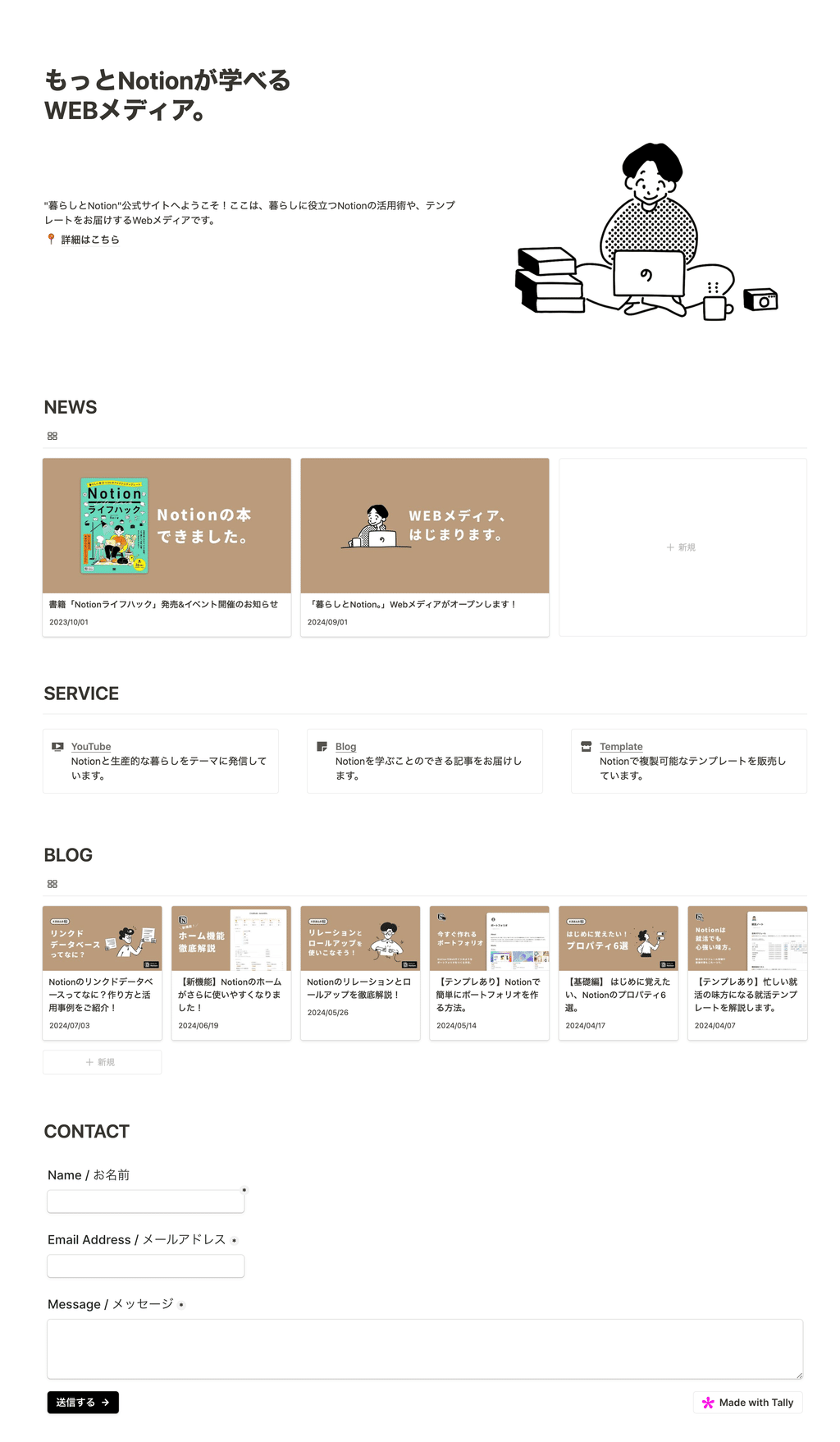
In this article, I will explain how to use "Notion Sites" and the newly added features, using a site I actually created as an example!
🎬 Director:Rei
✍🏻 Writer:Minokurumi
1. What are Notion Sites?
Notion already had basic features for turning pages into websites, but "Notion Sites," introduced in this update, takes it a step further. New features have been added, making it easier to create more professional websites!
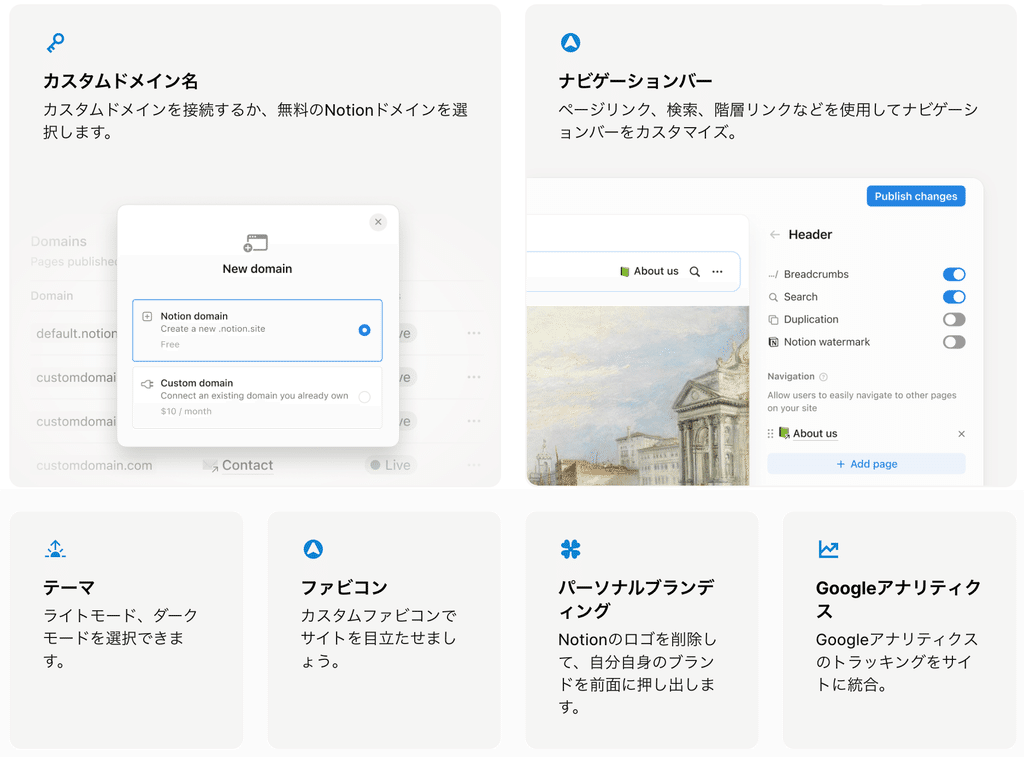
📝What you can do with Notion Sites
・Custom domain settings
・Header display/hide
・Light mode/dark mode selection
・Preview and favicon settings
・Removal of Notion logo
・Google Analytics settings
Until now, these settings could be achieved through external services, but the key point of this update is that everything can now be done within Notion.
We will explain the details and setup methods for each feature later.
2. How to create a website
This time, I tried to reproduce the official website of "Kurashi to Notion." using Notion Sites. From here, I will explain how to create a website-like page in Notion using this as an example.
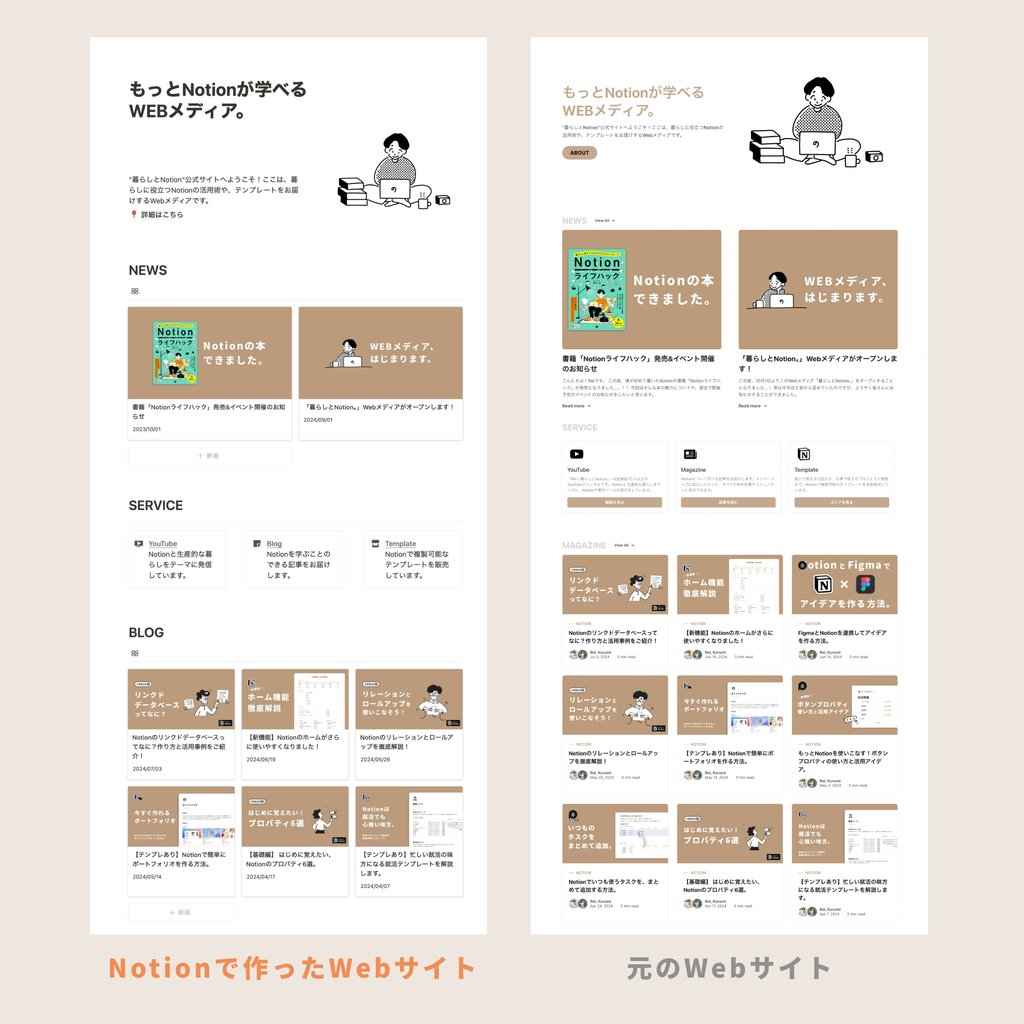
At first glance, it looks quite similar to the original page, doesn't it?
Header section
Below the title, I created two columns: the left side has a description and a link to the ABOUT page, and the right side has an image.
For the description, I added blank lines to create some spacing to balance it with the image next to it.
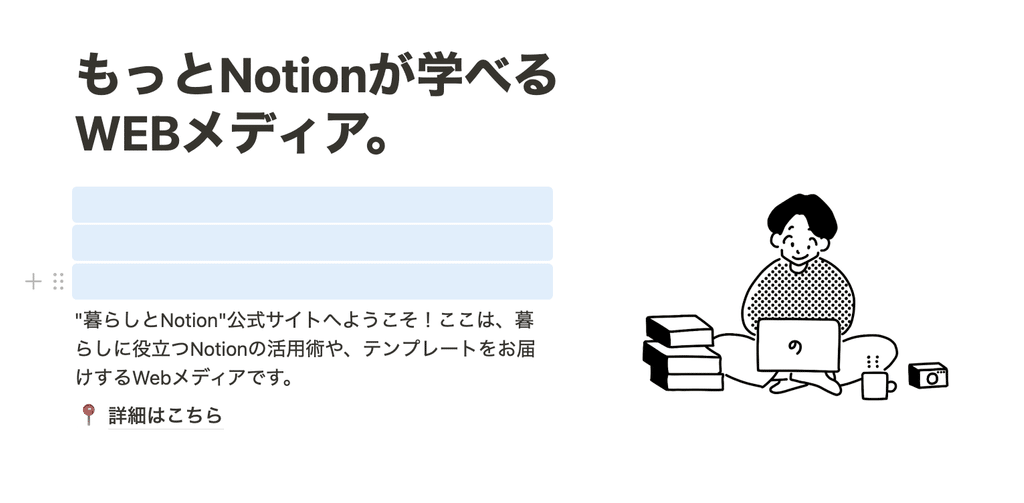
📝Image cropping is now available!
With a recent update, you can now crop images placed in Notion directly within Notion. You can do this by placing an image and clicking the crop icon in the top right corner.
NEWS
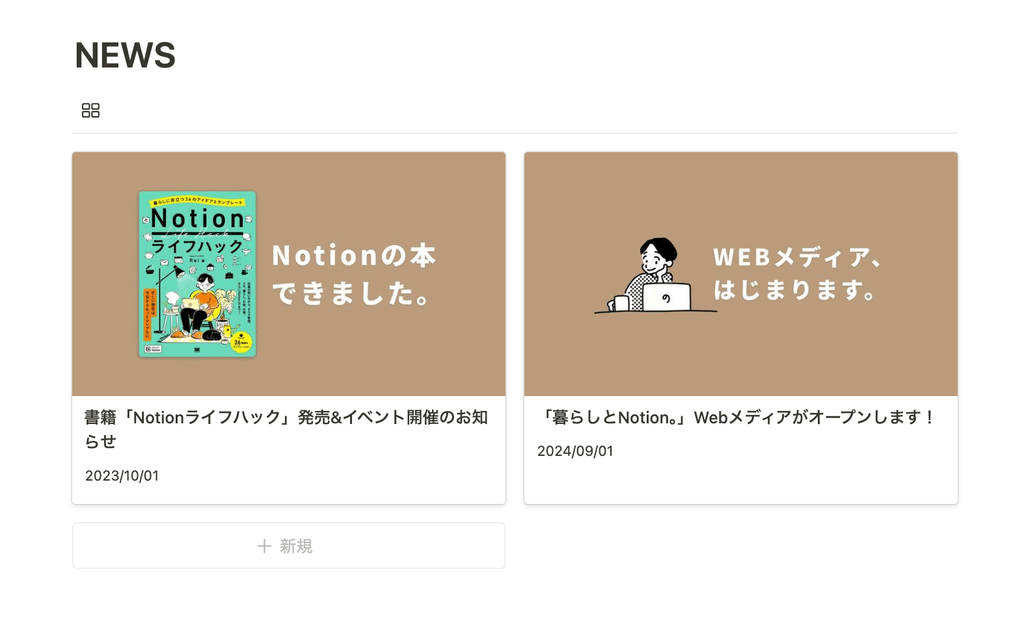
I used the "Gallery view" of the database to arrange NEWS articles. It displays the top image of the articles, making it look like a blog post list, and when you open the page, you can read the content of the article.
If you set the view name to just a half-width space, only the icon will be displayed, which makes the appearance simpler and is highly recommended.
Service Content
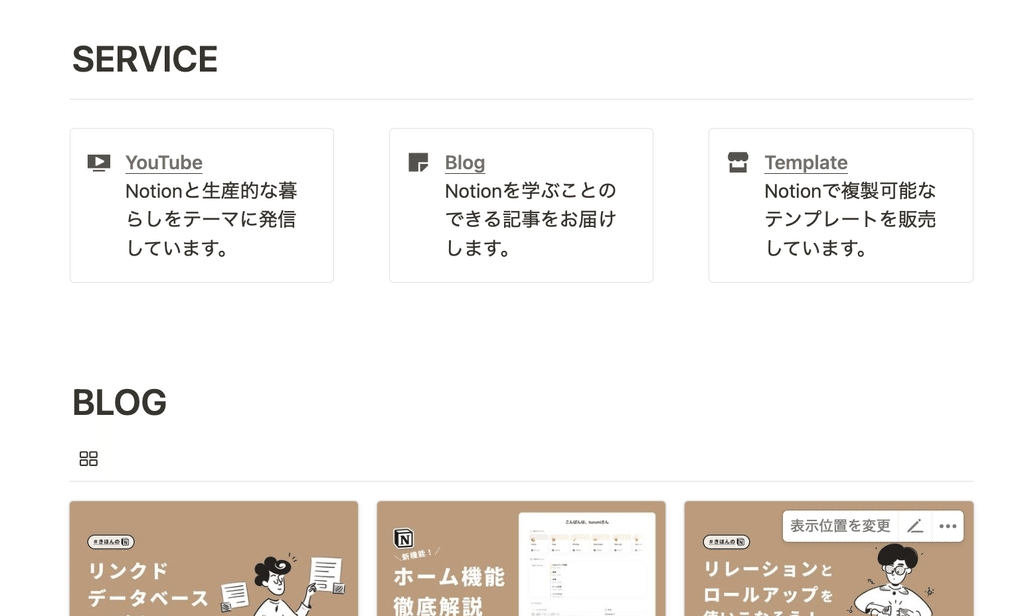
I created three columns and placed callout blocks. By selecting "Callout" from the "+" icon and setting the color to "No background color," you can create a simple design enclosed by lines.
I added a link to the title. You can specify a URL by selecting the text and clicking "Add link."
Blog
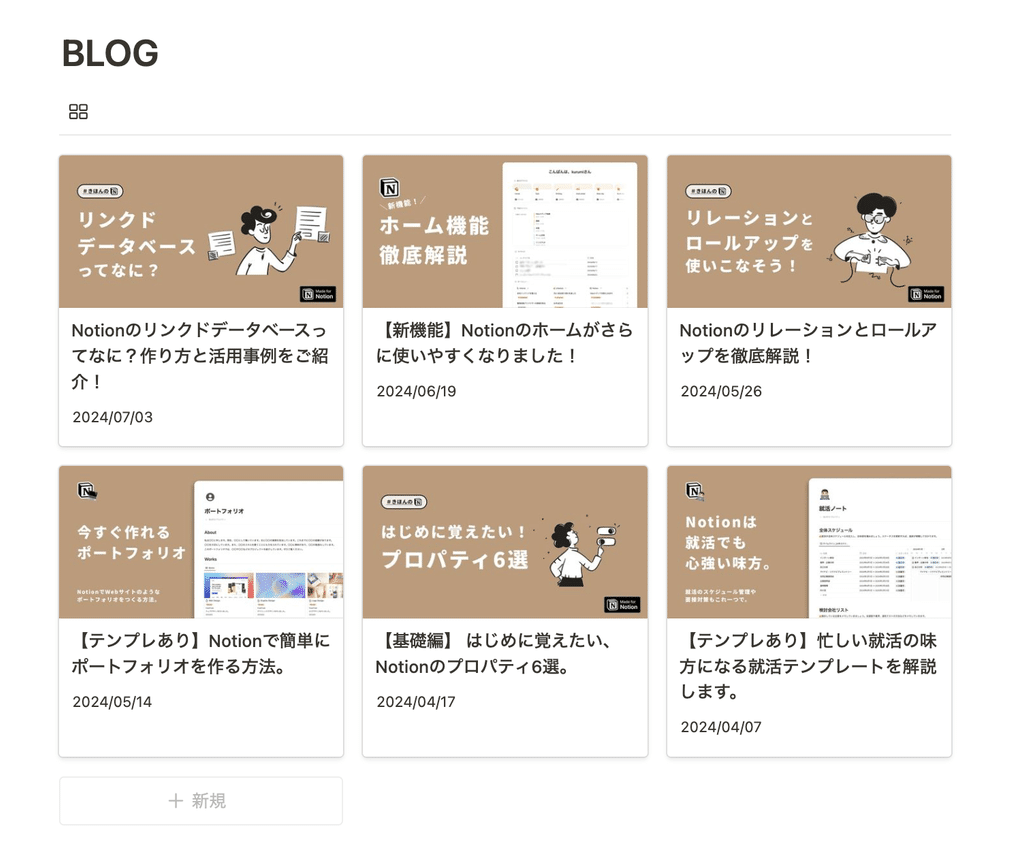
Similar to NEWS, a list of articles is displayed using the database's gallery view.
When used for a blog, you can write and edit articles directly on this Notion page, which should make management considerably easier.
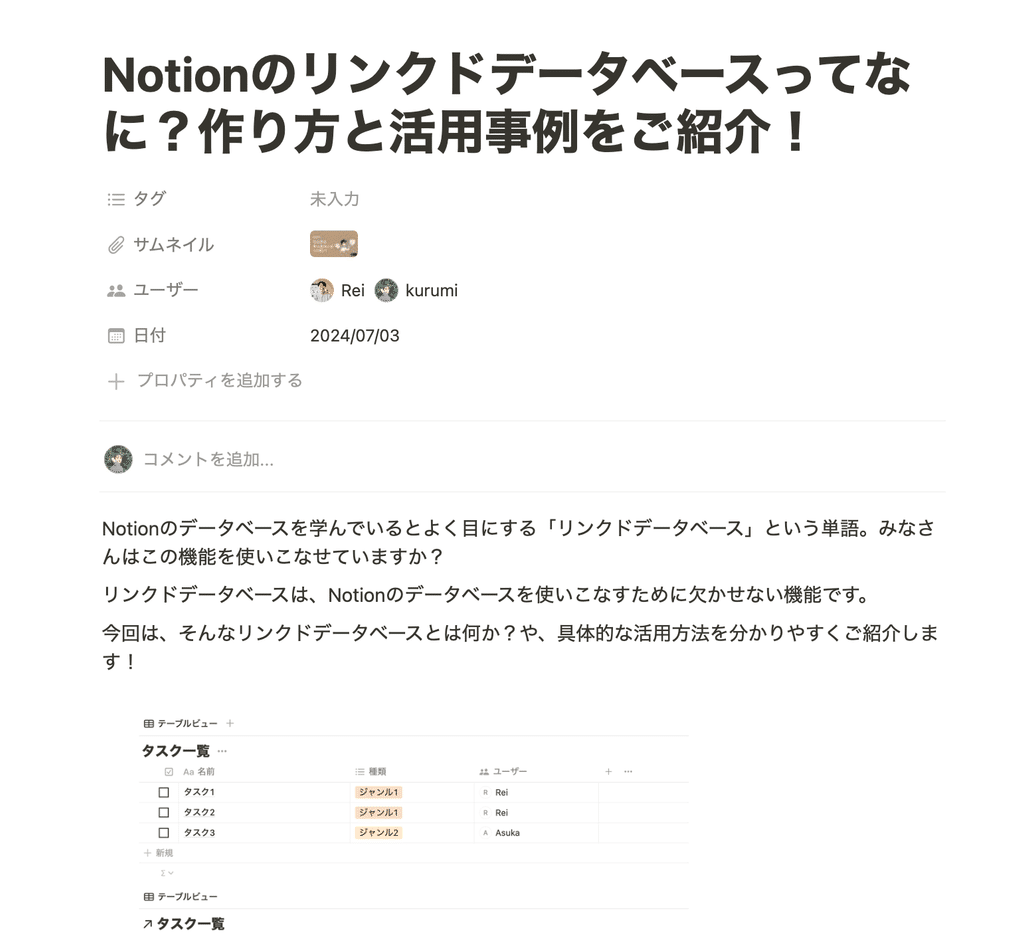
Form
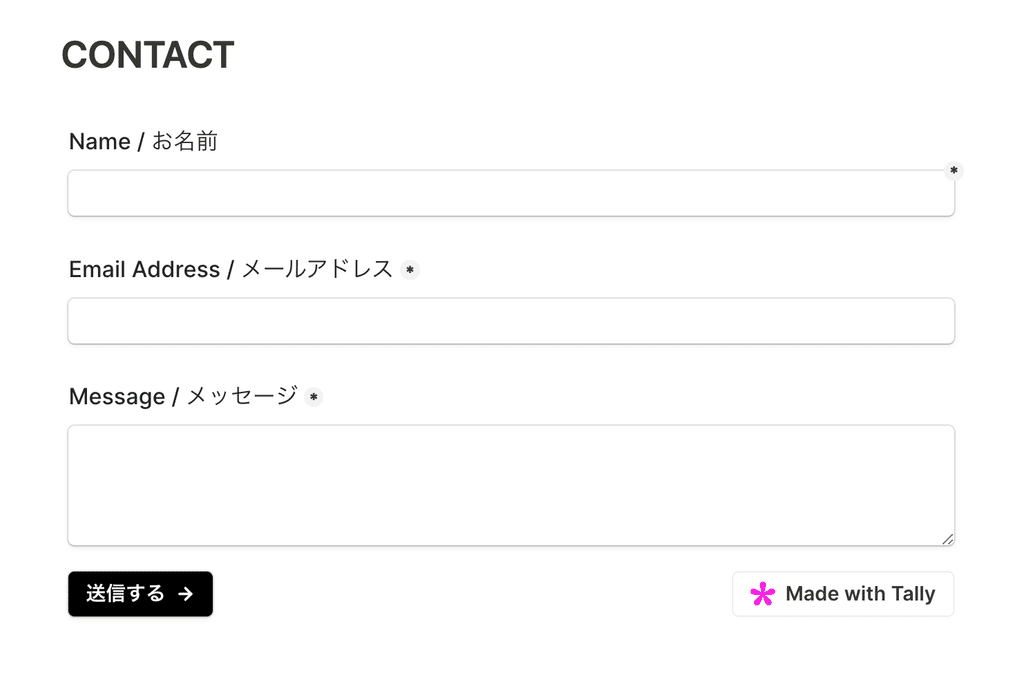
Finally, I embedded a form using "Tally," an external service linked with Notion. This service can be linked with Notion in the backend, and any information entered here will be sent to the specified database.
I plan to write a detailed article about Tally, so please register for membership and wait for it!
3. External publication and new feature setup
Next, I will explain how to publish the Notion page you created externally. I will also cover how to set up the new features!
3-1. Publishing a page externally
The process for external publication is very simple, and you can generate a URL by following these steps:
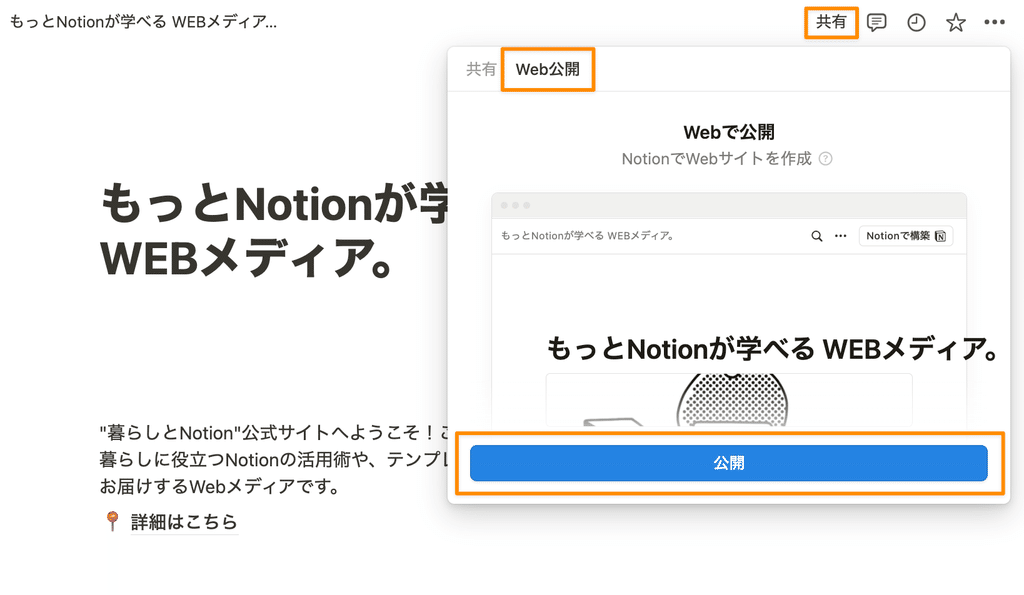
1. Click "Share" in the top right.
2. Select the "Publish to web" tab and click "Publish."
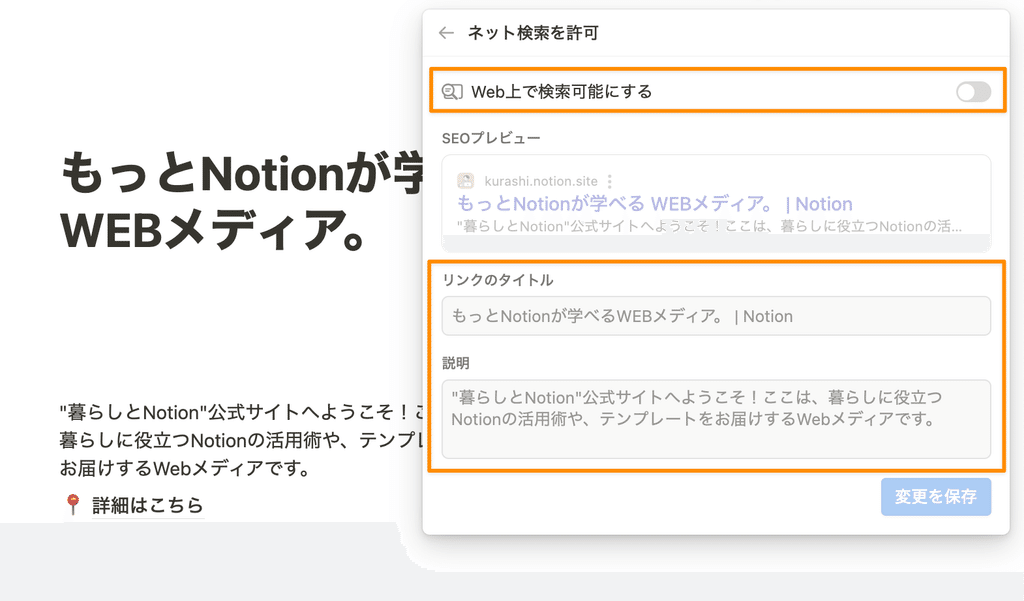
To make the page discoverable through search engines, turn on "Allow search engine indexing." Here, you can set the title and text that will actually appear in the search results.
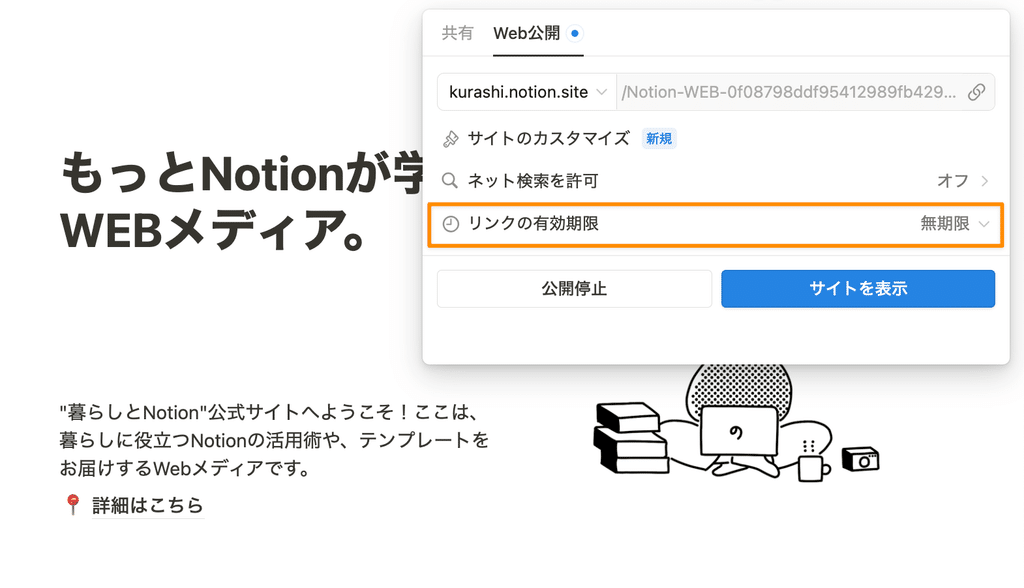
Also, if you want to publish the website continuously, set the "Link expiry" below to "Never."
3-2. Customize settings
Next, let's customize the detailed settings added in the update. The newly introduced features can be configured by clicking "Customize site" on the web publishing screen.
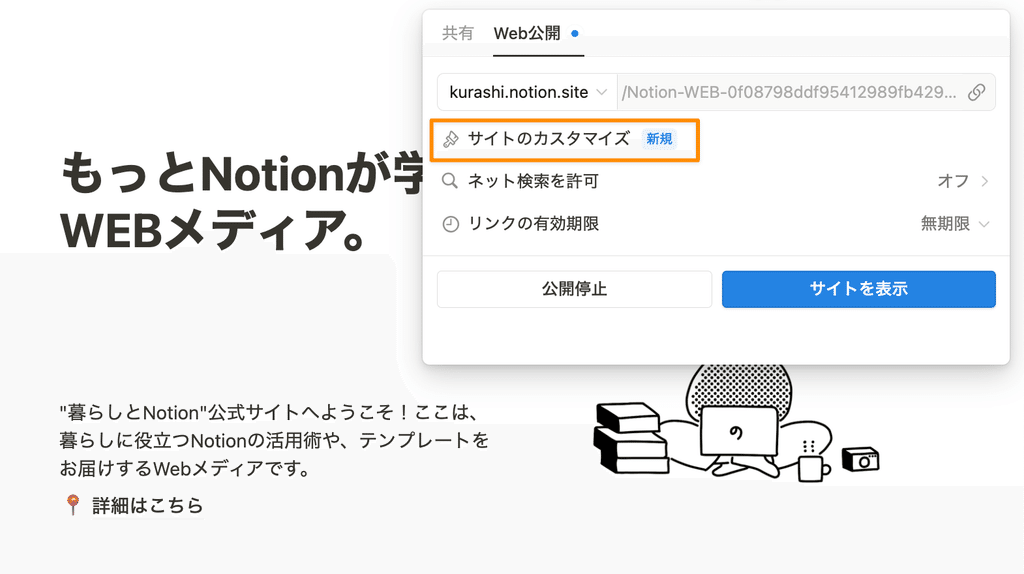
The following items can now be set:
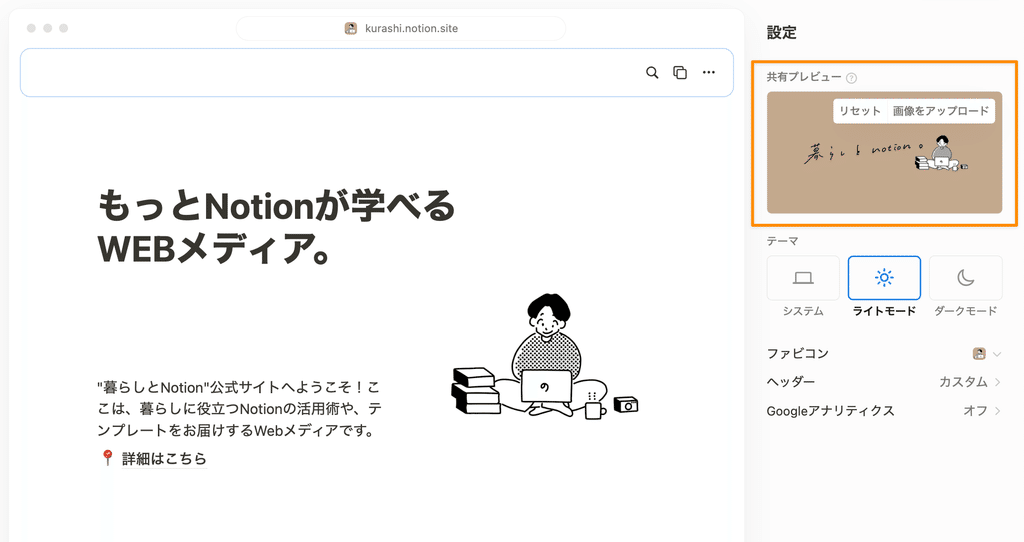
- Shared Preview → The image displayed when sharing a link on social media like LINE or Twitter.
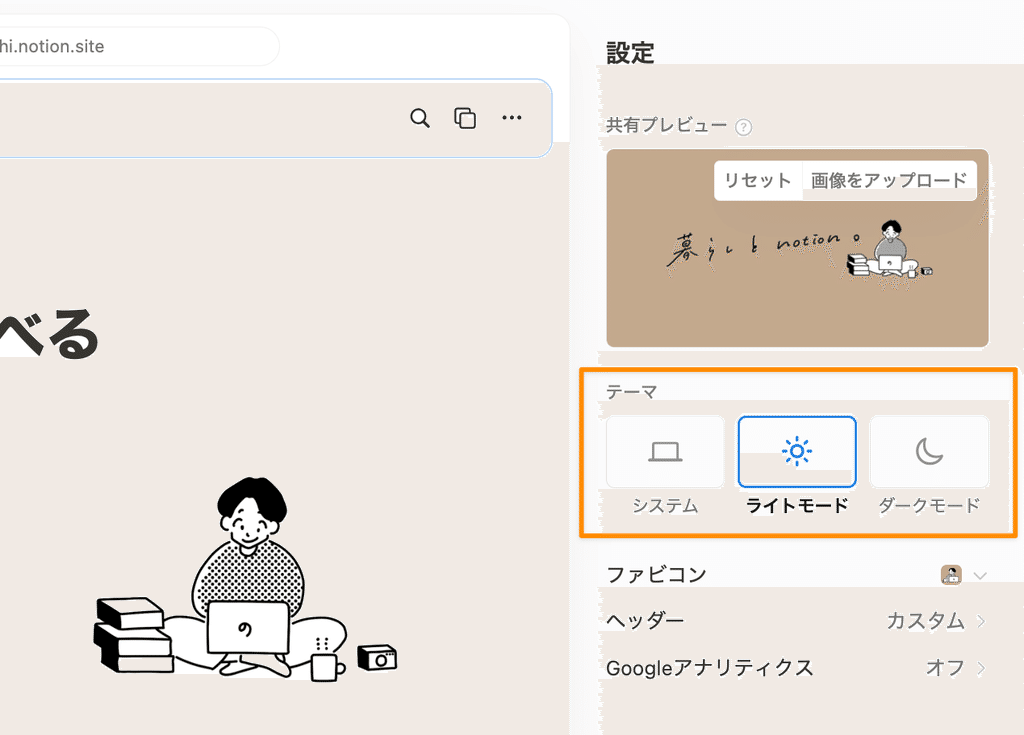
- Change Theme → A setting to always display in light mode (dark mode) regardless of the recipient's environment. (The previous setting where the appearance depended on the environment is "System.") Recommended when you want to specify the environment due to images or design.
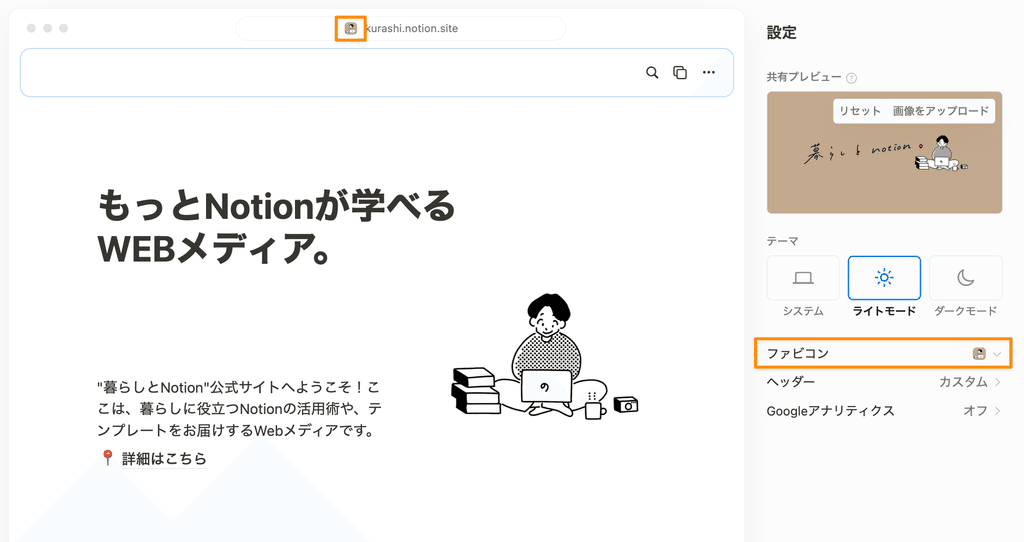
- Favicon → The icon that appears next to the title when you open a website or perform a search.
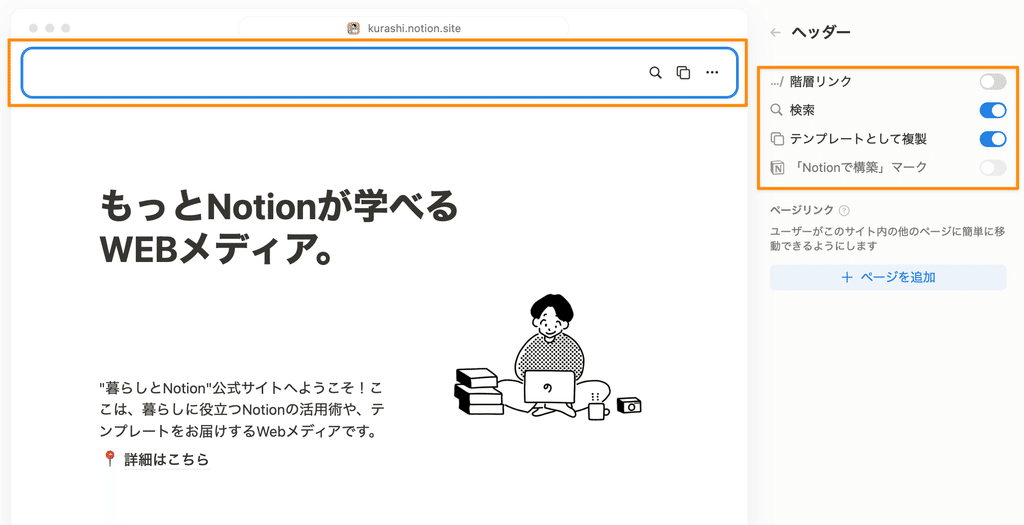
- Header → You can choose to display or hide the hierarchy at the top of the page, the "Built with Notion" mark, the search mark, and the duplicate template button.
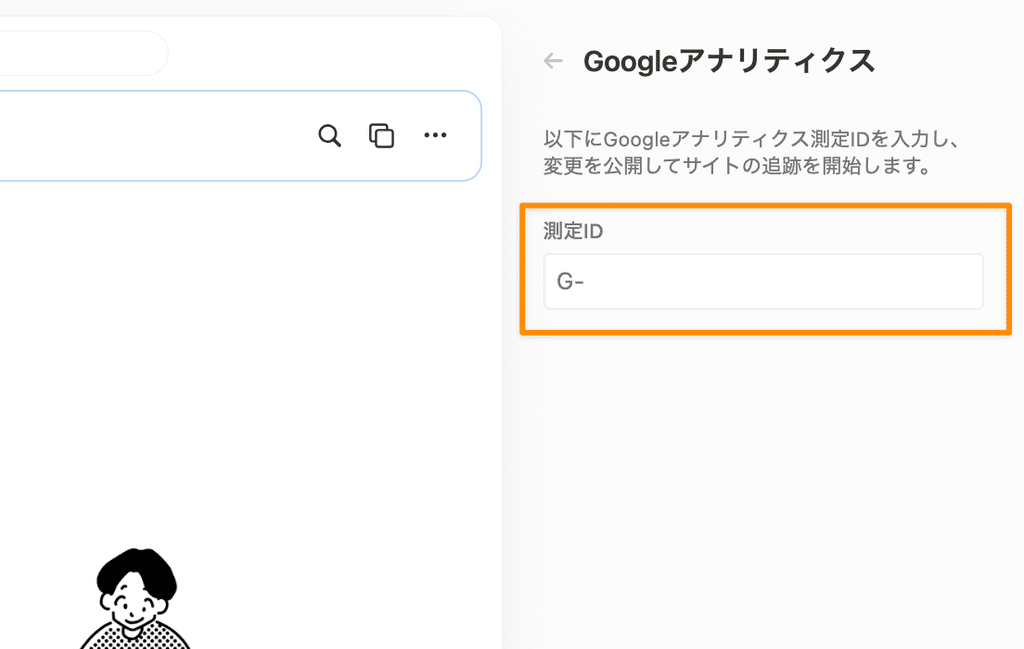
- Google Analytics → By setting up an ID, you can check analytics such as how many people visited the website directly on Notion.
4. Suitable uses and pricing plans
The "Notion Sites" introduced this time allows you to create web pages very easily, making it perfect for link collections to post on social media or portfolios.
It's also recommended for business use cases where you need to publish something temporarily but want to set up a proper domain, such as company recruitment pages that require frequent and easy updates, or pages listing community rules.
Finally, here's what you can do with each pricing plan.
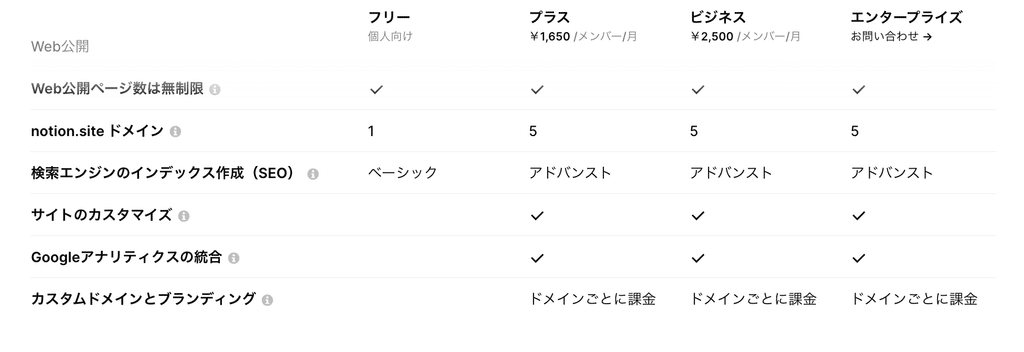
🔎 What you can do with the free plan
- Unlimited number of sites can be published
- One Notion custom domain "●●.notion.site" can be used
- Searchable on the internet
💰 What you can do with a paid plan (Plus plan or higher)
- Up to 5 Notion custom domains "●●.notion.site" can be acquired
- Site customization
- Set a domain homepage (a short URL ending in "●●.notion.site")
- Google Analytics settings
🔧How to set a domain homepage
Open "Settings" from the sidebar and then "Sites" to see a list of your published sites. By selecting a page under "Homepage" at the very top, that page can be set as a short URL ending in "●●.notion.site."
One important point is that the site customization features added in this new update (theme changes, favicon settings, etc.) are currently not available for the free plan. Therefore, if you wish to use these features or manage multiple domains for different purposes, you will need to subscribe to a paid plan.
Additionally, if you want to use a custom domain (such as "●●.com" or "●●.jp"), there will be an extra charge. This would be around 1200 yen per month, so it's advisable to compare it with other services before deciding.
🔗For more details on plans, click here
Summary
That concludes the explanation of "Notion Sites," which allows you to easily create websites with Notion!
This feature is highly recommended for anyone who wanted to create their own site, even if not a full-fledged professional website. The ability to acquire a domain as a step up from there is a major highlight.
The Notion page for the website created this time is also available for purchase as a template. If you'd like to use it as a reference to build your own site, please check it out!
The ultimate task management template achieved with Notion, "Todotion" is here!

The complete 2-hour "Notion Master Course" to learn Notion from scratch is now available!

The book "Notion Lifehacks," introducing 36 ways to use Notion, is also on sale now!